Fibre Channel is a high-speed network technology used to connect server to data storage area network. It supports data backup and replication. Fibre Channel is needed, as it is very flexible and enables the. Fibre Channel (FC) is a high-speed data transfer protocol providing in-order, lossless delivery of raw block data. Fibre Channel networks form a. While the SCSI Application Layer (SAL) and the SCSI Transport Protocol Layer (STPL) are inherently part of the SCSI specification, the Interconnect Layer can be implemented by a variety of interconnect methods such as the SCSI Parallel Interface (SPI), Fibre Channel, InfiniBand or TCP/IP, to name. “The Fibre Channel Industry Association (FCIA) is a mutual benefit, non-profit, international organization of manufacturers, system integrators, developers, vendors, industry professionals, and end users. FC-2M. The intention of the Fibre Channel (FC) is to develop practical, inexpensive, yet expendable means of quickly transferring data between workstations, mainframes, supercomputers, desktop computers, storage devices, displays and other peripherials. Fibre Channel is the general name of an integrated. Fibre Channel Architecture This chapter includes the following main sections: The two most common peripheral protocols for device communication in the computer industry are networks and channels. Networks Channels Fibre channel attempts to combine the best of these two methods into an I/O interface.
[PDF]
Abstract Generic cabling is a highly flexible modular information transmission pipeline within or between buildings, which can not only connect voice, data, image equipment or switching equipment with ot.
[PDF]
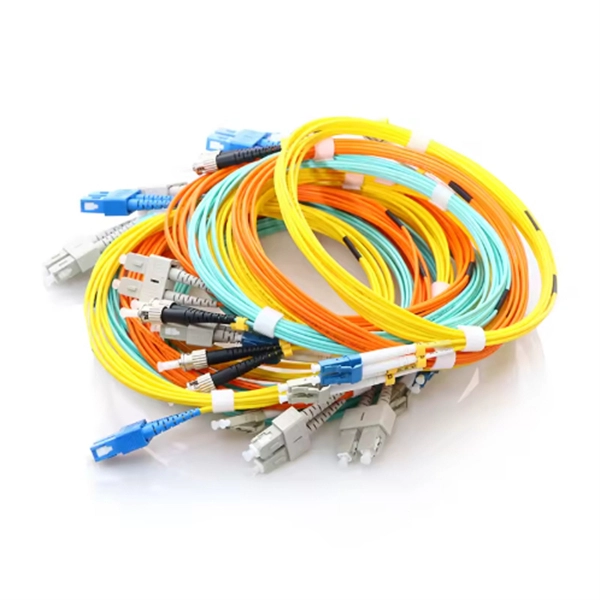
Fibre channel is a type of SCSI hard drive technology used in high-end systems with multiple hard drives installed. Using optical fiber to connect devices, fibre channel supports full-duplex data transfer rates up to 100 MB per second. Fibre channel is mostly found in servers and may eventually. CTL-I (Controller Interface) was an 8-bit word serial interface introduced by IBM for its mainframe hard disk drives beginning with the 3333 in 1972. The 3333 was the first unit in a string of up to eight 3330 type hard disk drives; it contained a CTL-I controller and two 3330 type disk. From an overall point of view, hard disk interfaces are divided into five types: parallel ATA (PATA, also called IDE or EIDE), SATA, SCSI, Fibre Channel, and SAS. IDE is mostly used in household products. And some of it are used in website servers. Here is an overall preview of these interfaces: Parallel ATA (PATA), IDE or EIDE, is a standard interface that connects hard disk drives and optical drives to a computer's motherboard. PATA technology. Fibre Channel – High‑speed networked storage interface for enterprise SANs. PCIe (Peripheral Component Interconnect Express) – Interface standard for NVMe SSDs and expansion cards.
[PDF]