The number of core switch ports is large, usually modular, and can be freely matched with optical ports and Gigabit Ethernet ports. The general core switches are Layer 3 switches, and various advanced network protocols such as routing protocol/ACL/QoS/load balancing can. Does every network need a core switch? Can a router be used instead of a core switch? How do I determine the bandwidth requirements for my core switch? What security features should I look for in a core switch? How often should I update the firmware on my core switch? What are the key performance. Home / Ethernet Switch / Do I need a core switch? The simple answer is “yes. ” Every complex network comprises multiple computers and devices. To route the traffic and improve the performance of the network, you must have a proper mechanism. What would you employ to simplify the network? The core. ● Up to 28 native nonblocking 40/100 Gigabit Ethernet QSFP28 ports. 3-GHz x86 CPU with 8 cores and 32 GB of DDR4 memory. ● Up to 960 GB of SSD. rity to ensure guests and property peaceful and safe. Our solutions provide stable and continu arge commercial buildings host many separate entities. The primary function is to access user data or aggregate some switch data at the access layer. This kind of switch can configure Vlan simple routing protocol and some simple. The number of conventional switch ports is generally 24-48.
[PDF]
This article helps enterprise network owners, data center managers, and field engineers estimate total cost of ownership for a 400G rollout while avoiding the common “buy the fastest optics” trap. The Brazil 400G Switch Market is positioned at a pivotal growth juncture driven by escalating data center demands, cloud infrastructure expansion, and 5G network rollouts. As digital transformation accelerates across Latin America, Brazil emerges as a key regional hub for high-speed networking. Brazil's Fiber Optic Connectivity market is projected to reach approximately USD 2. 5 billion in 2026, driven by rapid 5G densification and hyperscale data center expansion in São Paulo and Rio de Janeiro. FTTx access networks account for over 45% of total demand by volume, fueled by federal. As per analysis, the Brazil Ethernet Switch Market is projected to grow from USD 0. 184 Billion in 2025 to USD 0. 297 Billion by 2035, exhibiting a compound annual growth rate (CAGR) of 4. 98% during the forecast period (2025 - 2035). Universal Leaf & Spine Modular Spine High Network Radix Fixed Leaf & Spine for High. 400G and 800G Switches by Application (Large-scale Cloud Computing, Artificial Intelligence, 5G), by Types (400G Switch, 800G Switch), by North America (United States, Canada, Mexico), by South America (Brazil, Argentina, Rest of South America), by Europe (United Kingdom, Germany, France, Italy.
[PDF]
To configure and manage AAA servers, complete the following steps. Select Administration > Admins and Roles > AAA. SSH Authentication: Enable the option for secure authentication. Telnet Authentication: Enable the option to. Authentication provides a method to identify users, which includes the login and password dialog, challenge and response, messaging support, and encryption, depending on the selected security protocol. Authentication is the way a user is identified prior to being allowed access to the network and. Selects the type of security access: local Authenticates with the manager and operator password you configure in the switch. tacacs Authenticates with a password and other data configured on a TACACS+ server. 1X, MAC RADIUS, and captive portal as an authentication methods to devices requiring to connect to a network. You can control access to your network through a Juniper Networks EX Series Ethernet Switch by using authentication. In this guide, we are going to enable AD authentication on network switches and routers. The workhorse will be the Network Policy Server role in Server 2012/R2. After our server configuration, we will then configure our switches to point to our NPS (RADIUS) device and change their authentication. Network Admission Control (NAC) implements authentication, authorization, and accounting on device administrators and access users, ensuring the device and network security. Both RADIUS and HWTACACS use the.
[PDF]
This data sheet describes the benefits, specifications, and ordering information for the Cisco Catalyst 9200 Series Switches. Default (Normal mode) : All ports can communicate with each other, VLAN (Secure mode): Downlink ports can communicate only with uplink ports. Enabling PD keepalive function, the switch will restart the IPC via PoE power when the IPC sends no message in a period of time, Extend (Surveillance mode):. New Taipei, Taiwan, May 19, 2025 - UFISPACE,a global leader in open networking solutions, has partnered with GIGABYTE to exhibit advanced data center switches at COMPUTEX 2025 (Booth No: K0802, Taipei Nangang International Exhibition Center, Hall 1). Featuring state-of-the-art Broadcom chipsets. Take advantage of limited-time promotions and offers on Cisco Catalyst Switching. Upgrade now and enjoy the savings. Cisco ® Catalyst ® 9200 Series switches extend the power of intent-based networking and Catalyst 9000 hardware and software innovation to a broader set of deployments. With its. PoE is a technology for wired Ethernet LANs to carry electric power required for the device in the data cables. 3af PoE standard provides up to 15. 4 W of power on each port. If you have switches. Max. PoE Power EXTEND (Surveillance mode): Transmission distance up to 250 meters. 3bt compliant devices such as IP cameras, VoIP phones, and wireless access points. When connecting network.
[PDF]
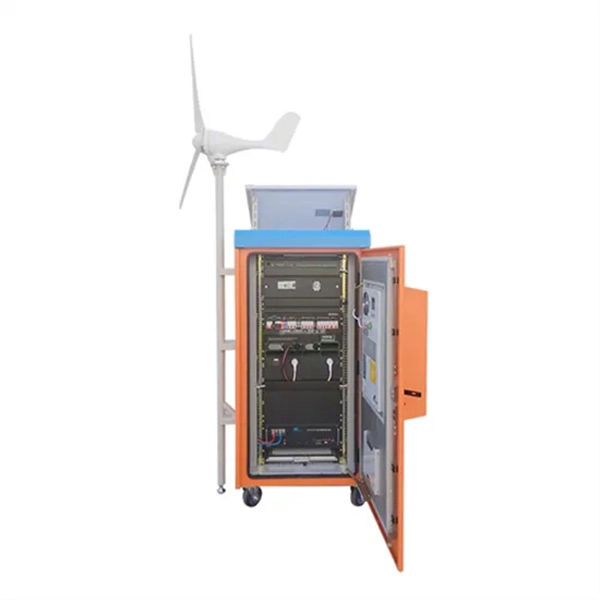
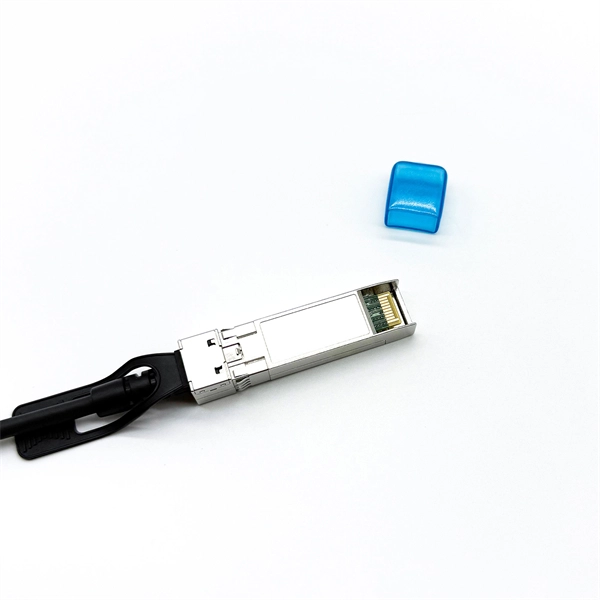
When selecting an SFP module, consider the following factors: Ensure the module matches the speed of your switch or router port (e. Depending on your deployment, choose 850nm, 1310nm, 1550nm, or even CWDM/DWDM wavelengths. SFP (Small Form-factor Pluggable) is a compact, hot-pluggable network interface module used to connect network devices (switches, routers, firewalls) to fiber optic or copper cables. Think of it as the “translator” for your network equipment, converting electrical signals into optical signals. SFP optical modules are the unsung heroes of fiber networking—the essential interface that converts electrical signals from network equipment into optical signals for transmission over fiber optic cable, and vice-versa. Choosing the wrong SFP optical module can result in link failure, instability. Optical transceivers are at the heart of modern fiber networks - connecting switches, routers, and servers with blazing-fast links. Cisco's SFP, SFP+, and XFP modules are among the most widely used standards across enterprise and carrier environments. They determine data rate, transmission. With our expert guide, you can easily maximize network performance while optimizing your expenses the next time you're choosing a switch/router, optic, or supporting cabling. It converts electrical signals into optical (or copper) signals and vice versa. It allows network administrators to adapt hardware to different media types and.
[PDF]
Power over Ethernet (PoE) is a technology that enables the transmission of electric current and data simultaneously over Ethernet cables, eliminating the need for separate power cables. This section wil.
[PDF]
The system in this example contains the following elements: 1. 2 Pseudo-random Bit Stream (PRBS) block 2. 2 NRZ Pulse Generator (NRZ) 3. 1 CW Laser (CWL) 4. 3 1x2 Fork (FORK) 5. 2 Electrical Not Gate (N.
[PDF]
MDC virtualizes one S7500X switch into multiple logical switches, enabling multiple services to share one core switch. The 1:N virtualization maximizes switch utilization, reduces network TCO, and ens.
[PDF]
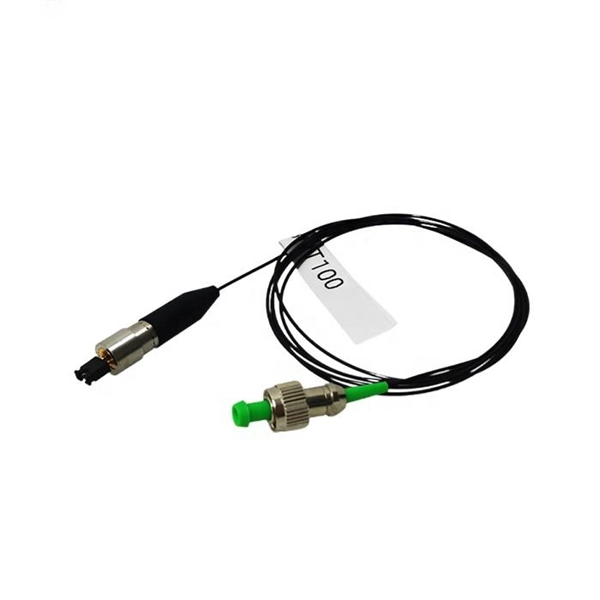
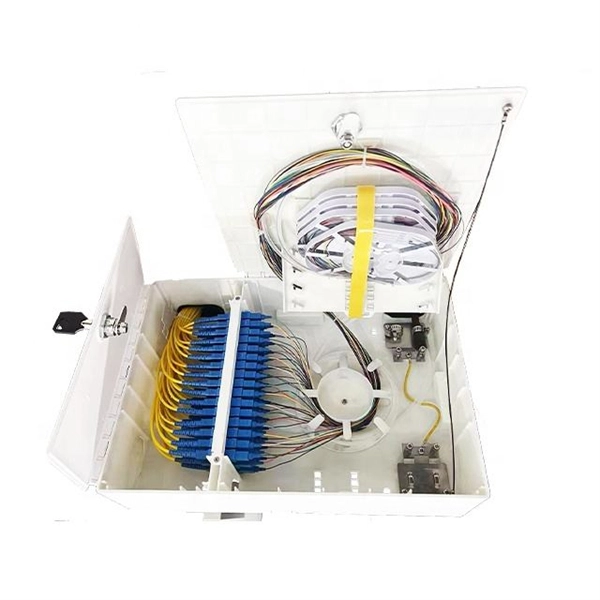
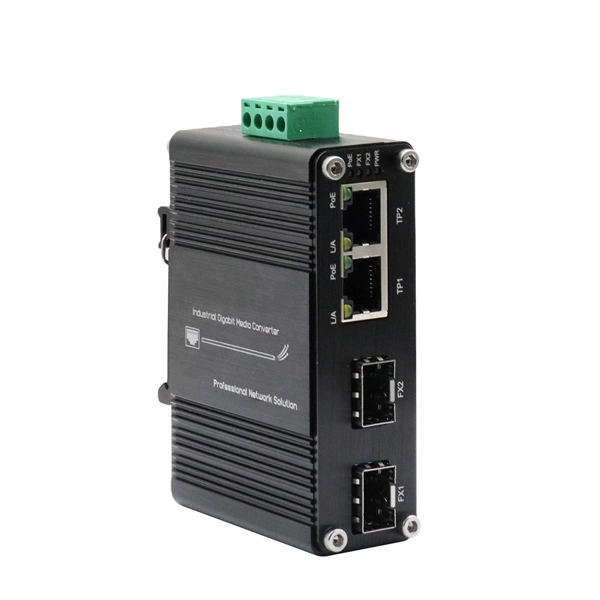
This diagram highlights media converters, switches, and cable types. Also thanks to Init7 (for the great service), r/FiberOptics and FS for providing me with what I needed to get this setup going. If you find this article useful and you are considering Init7 as your provider you can use my referral code “20700408098” to get CHF 111. - off hardware and also support me. Keeping this page as a placeholder for now. Have any questions? Talk with us directly using LiveChat. A fiber optics network diagram illustrates how high-speed data travels from an internet service provider to end users. By using light signals, fiber optics provide faster speeds and better reliability than. MS Visio has long been the default choice for drafting fiber network diagrams, and with the right stencil libraries it can be used to draw everything from backbone routes to detailed patch panel layouts. When fiber techs look for visio fiber stencils, they are usually solving a very practical. Be among the first to receive important product updates, insights and news. Fiber optic cable is used for everything from demarcation point wiring to network signal distribution to video signal extension. Often, fiber enters the structure to a centralized rack or data room where it is connected to a modem. The modem connects to a network switch which connects each remote.
[PDF]
There are more than ten proprietary implementations. The more common ones are discussed below. Some Cisco WLAN access points and supported a proprietary form of PoE many years before there was an IEEE standard for delivering PoE. Cisco's original PoE implementation is not software upgradeable to the IEEE 802.3af standard. Cisco's original PoE equipment is capable of delivering up to 10 W per port. The amount of power to be delivered is negotiated between the endpoi.
[PDF]
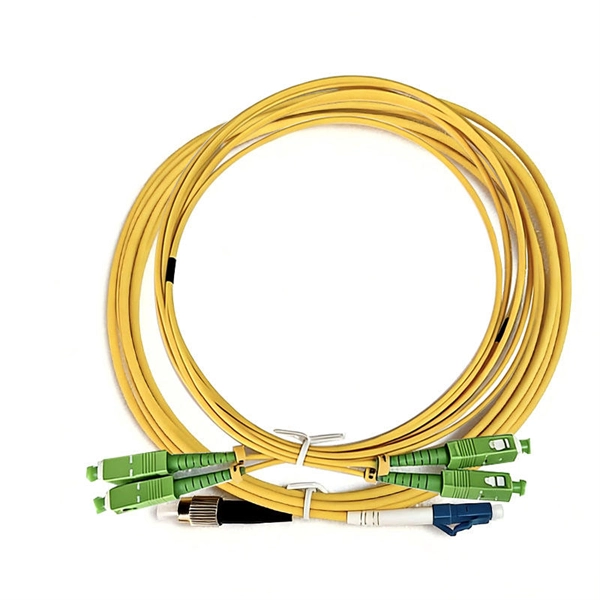
The aggregate switch plays a critical role in ensuring network performance and reliability. An aggregate switch is a high-capacity network switch that consolidates connections from multiple access switches, acting as a central point for managing network traffic and providing enhanced bandwidth capabilities. It is essential for larger networks requiring efficient data flow. You may also. So, what exactly is an aggregation switch, and how do you choose the right one? Let's examine it in detail. The primary function of an aggregation switch is to aggregate and forward data. Switch aggregation refers to the concept of consolidating multiple access layer switches into a single aggregation layer switch in a traditional three-tier network design. The aggregation layer serves as the convergence point for multiple access layer switches and is responsible for handling all. Whether in enterprise networks, data centers, or campus environments, aggregation switches act as a bridge between access switches and core switches. The NVR is connect via Fibre to the USW as well. So. ? Any hints welcome! Archived post. New comments cannot be posted and votes cannot be cast.
[PDF]
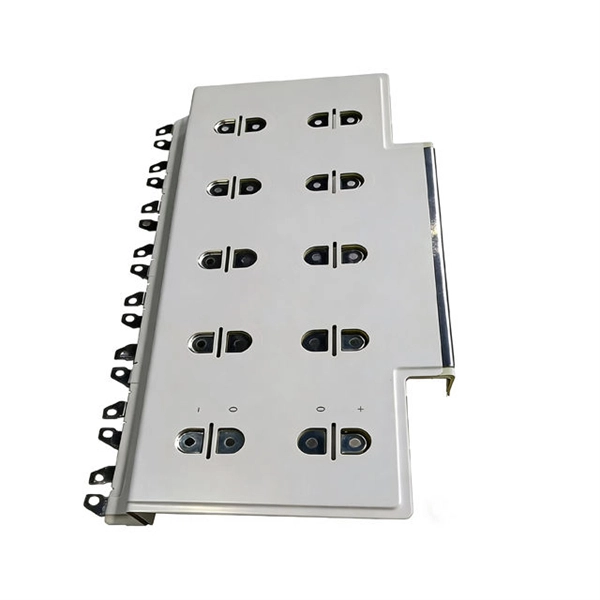
Quick Answer: To check CPU utilization on a Cisco switch, use the command “show processes cpu” in the CLI. This displays current CPU load, CPU usage history, and process-specific details, aiding in network performance troubleshooting. The CPU becomes too busy when either an IOS process consumes too much CPU time or the CPU receives too many packets from the switching hardware. When either of these two CPU consumers requires the CPU resource to the detriment of the other, then the CPU is too busy. For instance the CPU is. High CPU utilization on Cisco switches can lead to degraded network performance, packet loss, and even switch failures. Identifying and troubleshooting the root cause of high CPU usage is essential for maintaining a healthy network. In this article. I noticed that after having VLANs, ClearPass, spanning tree, and all other settings configured, that CPU util was just sitting at or above 85% on all these switches. I updated firmware to the latest version on all of them, but that didn't help. Problem analysis process 1. According to the switch logs, after searching for related processes, we can find that the. my switch core has high CPU usage every 3 minutes, switch logs attached. Do the outages/CPU spikes occur at the same time as the log entries appear such as : 00828 lldp:. Thank you, Fix the problem indicated.
[PDF]
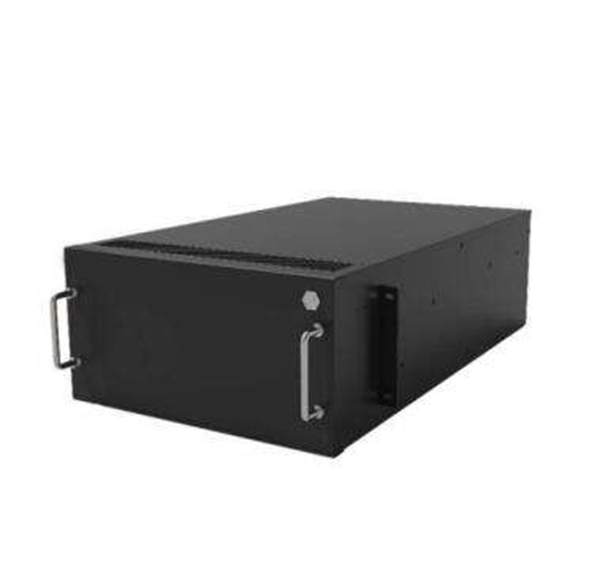
Cisco announces the end-of-sale and end-of-life dates for the Cisco Catalyst 1000 Series Switches. The last day to order the affected product (s) is April 30, 2025. Tax included. This item is a deferred, subscription, or recurring purchase. By continuing, I agree to the and authorize you to charge my payment method at the prices, frequency and dates listed on this page until my order is fulfilled or I cancel, if permitted. Customers with active service contracts will continue to receive support from the Cisco Technical Assistance Center (TAC) as shown in. Intuitive software interface for effortless network configuration and monitoring. 8 x 1G ports Energy efficient 2 x 10G ports The NETGEAR 10-Port Gigabit/10G Ethernet Plus Switch (GS110EMX) is a versatile and efficient networking solution featuring 8 x 1G and 2 x 10G ports, designed for seamless. Cash On Delivery. Delivery All Over Lebanon. A 24-port, Layer 3 switch capable of high-power PoE++ output. Flexible 10 Gigabit connectivity for SME and SMB environments. Packet Forwarding Rate Buy online D-Link 24-Port Gigabit Stackable Smart Managed Switch with 10G Uplinks |DGS-1510-28XMP at ayoubcomputers. AYOUB. Discover the TP-Link Switches collection, providing efficient networking solutions designed to enhance connectivity and streamline your network infrastructure. These switches deliver reliable performance and advanced features, making them ideal.
[PDF]
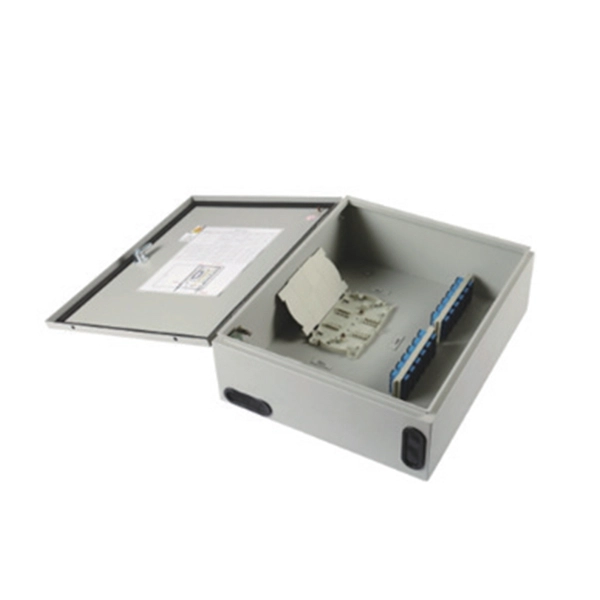
The core switch functions as the central point of the entire network, forming the high-speed backbone for the organization's data infrastructure. Its primary purpose is to provide an optimized and reliable transmission structure for all aggregated data traffic. Simply put, it's the kingpin that keeps your network humming. You may also want to know: Can a Nintendo Switch Play DS Games? ·. A network switch connects multiple devices within a local area network (LAN) and directs data packets only to their intended destination. In large organizations, networks become complex, exchanging massive amounts of data. The core switch is the most important piece of hardware in this. A core switch is a high-capacity, high-performance Layer 3 switch positioned at the physical backbone of an enterprise network. Engineered to aggregate massive volumes of data from distribution switches, it provides ultra-low latency and maximum throughput to ensure uninterrupted routing and packet. A core switch is a crucial component of a network infrastructure that serves as the backbone of a network. It's a high-performance switch that provides high-speed connectivity between different network segments, which may include access switches, distribution switches, and routers. These switches are high-capacity, usually handling the greatest amount of traffic compared to other switches in the network. They primarily focus on speed.
[PDF]
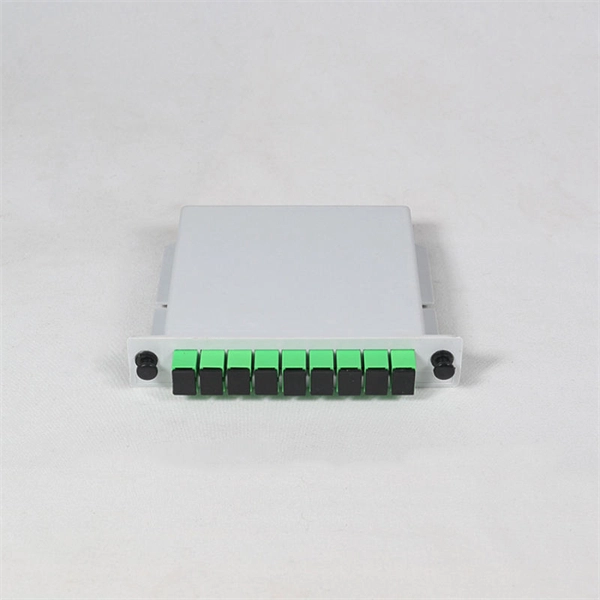
In this video, we'll guide you through the process of configuring a Huawei Switch for your network. Whether you're setting up a new switch or optimizing your existing network infrastructure, this step-by-step tutorial will help you get the job done efficiently. This document provides campus networks typical configuration examples and feature typical configuration examples. "Campus Networks Typical Configuration Examples" provides typical campus network networking modes and a variety of deployment examples. This document is for switches running V200R003C00 and later. In this video, we'll guide you. Saving Configuration: Save changes to make the configuration permanent: Checking Settings: Use commands like display user-interface console 0 to verify correct configuration. Exiting the Device: Log out of the device after completing the configuration. Enabling Telnet Service and Granting Access on. The Combo interface, also known as the optical-electrical multiplexing interface, consists of two Ethernet ports (one optical and one electrical) on the device panel, and there is only one forwarding interface inside the device.
[PDF]