Air-based cooling is the most traditional and widely used method, relying on fans and air circulation to remove heat from server racks. Techniques like hot aisle/cold aisle configurations, where racks are arranged to separate hot and cold airflows, enhance the efficiency of. Keep your server rack cold by managing airflow effectively. Use blanking panels to cover empty spaces, arrange cables to keep airflow clear, use hot/cold aisle containment strategies, and employ rack mount cooling solutions like exhaust fans, vents, liquid cooling, or heat exchangers for the best. Server cooling presents challenges unique to the environment that a rack is in. Server racks are designed to help manage airflow and keep the temperature at operating specifications. Choosing the right type of fans and positioning them properly allows data center managers to bring cool air in from. Server racks can get hot fast. When the heat isn't managed well, it can slow down your servers, cause shutdowns, or even damage your equipment. Over time, this can lead to costly problems. In this guide, we'll explain why server rack cooling is important and show you how to keep your servers cool. Need Help Cooling a Hot Rack? Tripp Lite rack fans are designed for the needs of the IT department. With a variety of options available, you'll want to make certain the one you select offers efficient airflow and low noise levels. From the Tupavco Rack Mount Fans to the AC Infinity.
[PDF]
Server racks are not merely a solution for storing data, they help in constituting the core of security, organization, and efficient IT infrastructure. Businesses are making great use of data storage and seamless.
[PDF]
From 42u to 48u, our seismic server racks and cabinets can hold their own against the Earth. Need additional stability, consider adding optional bolts or brackets for reinforcement. NEBS GR 63-Core certified zone 4 cabinets for earthquake prone or areas subject to regular vibrations, such as airports, factories and high rise buildings. Solid sided construction, 2 pair of fully adjustable mounting rails, Seismic bolt down base with cable access holes, top panel with cable. Discover premium seismic racks at Server Racks Online, engineered to protect your critical equipment in earthquake-prone and high-vibration environments. Our seismic racks meet strict industry standards, offering robust construction and enhanced stability to safeguard IT, server, and network. SR42UBZ has been designed and tested to meet Telcordia GR-63-CORE Network Equipment & Building Systems (NEBS) requirements for Zone 4 Seismic Earthquake Environments. It is designed for secure, high density server and networking applications in IT environments that are earthquake prone or subject. EnviroGuard's Rack Series seismic flooded battery racks conform to UBC standards and are certified to meet IBC 2012 standards for essential facility applications. Designed with provisions. Emcor's seismic qualified enclosures are designed to meet or exceed the Telcordia NEBS Zone 4 testing objectives and earthquake requirements.
[PDF]
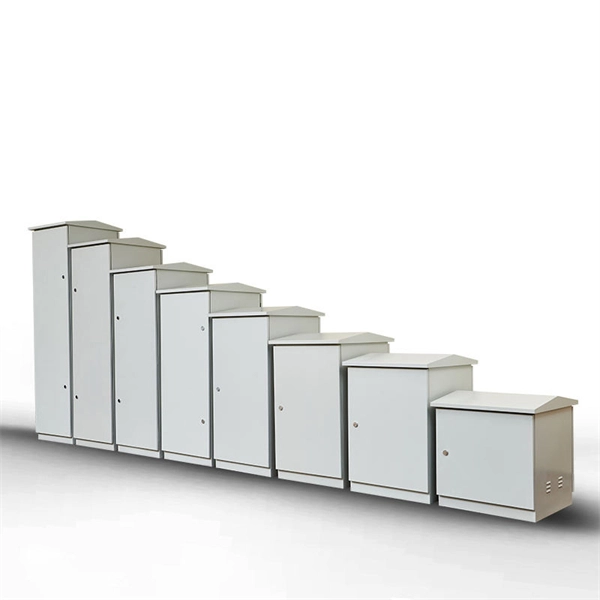
Discover AZE Telecom's outdoor weatherproof cabinets and waterproof server racks. Designed to protect electronics, servers, and network equipment in harsh environments. Durable, secure, and customizable—find the perfect solution for your outdoor telecom needs today!. The UPS Family is the Eaton brand name for a particular type of UPS. For Stand-By UPS systems, the families are Internet Office, BC Pro® and BC Personal®. For On-Line UPS. AZE's 19" outdoor server racks and outdoor network cabinets are ideal for protecting sensitive network systems from any damage due to impacts and harsh climatic conditions.
[PDF]
It supports a maximum of 10 x double-width GPU cards, 4 x standard PCIe cards, and 3 x OCP NICs, and provides ultra-large capacity or ultra-fast storage through 24 x 3. 5" drives or 12 x NVMe SSDs. FusionServer G5500 V6 Server Technical White Paper Contents Contents About This Document. v 1 Product Overview. 13 5 Hardware. • FusionServer G5500 V7 (G5500 V7) is a new-generation 4U 2-socket AI server. • G5500 V7 features high. The advantages of deploying DeepSeek-R1-70B large model on the G5500 V6 AI server for super fusion fusion fusion - Sell Dell/Xfusion/Huawei server,From China. Page 2 Actually, the information of each Restriction vendor on the network is incomplete or may not be up-to-date. In addition, Huawei may update this course Scenario without notifying the customer. Page 3. I built and tested a general-purpose MCP AddIn for Fusion which I suspect has great potential in future; it's a careful architecture which generically exposes all API internals to the AI, no limits, making it possible to help with anything and everything you might ever need. If anyone's interested.
[PDF]
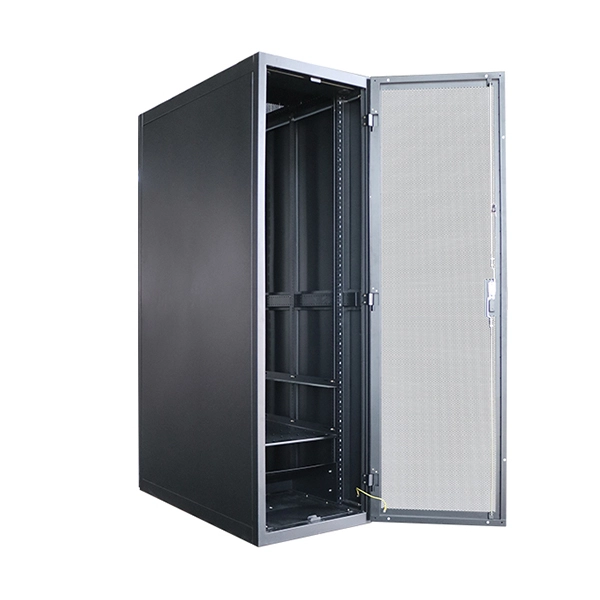
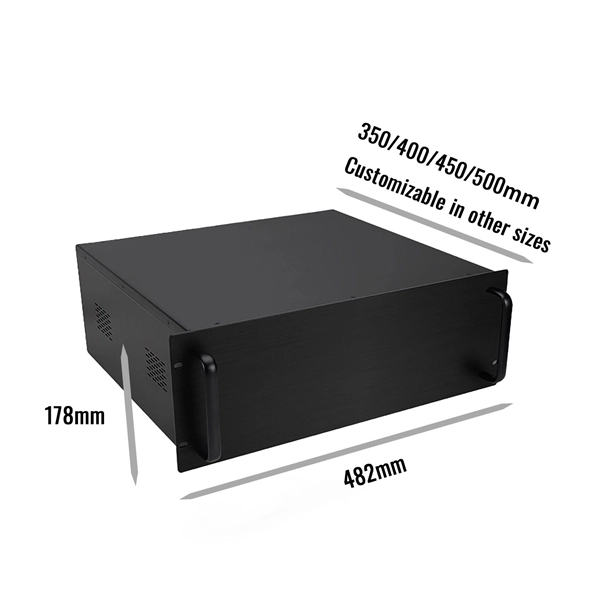
A server rack is a standardized metal enclosure designed to mount IT equipment—servers, switches, routers, PDUs, UPS systems, storage devices, patch panels, and cable managers—using vertical rails spaced according to the EIA-310 19-inch standard. What is a Server Rack? A server rack is specially designed to store various networking devices, which can effectively organize, manage, and protect network equipment including servers, network switches, routers, UPS, storage devices, etc., ensuring the stable and reliable operation of equipment. There are three primary rack types - open-frame racks, enclosed cabinets, and wall-mount racks, each suited for. The server rack is designed to house, organize and secure servers, networking equipment and other IT hardware. It provides efficient cable management, air flow and physical protection for sensitive electronic devices. Learn more about how airflow affects server performance in our detailed guide on how airflow works inside a. Hot and cold air containment systems designed to maximize cooling predictability, capacity, and efficiency at the rack, row or room level. Intelligent air containment solutions that protect critical IT equipment and personnel. Server racks come in a variety of sizes and configurations, ranging from small desktop units to large floor-standing.
[PDF]
To calculate the installation costs, the amount and type of equipment to be assembled and the necessary technical hours will be assessed. In case of needing extra power, it will be billed at a rate of € 50 / month for each 0. com offers a large selection of wholesale rack server cold aisle cabinet for mounting and storing your servers. These network cabinets are built to keep dust and contaminants away from hardware. CTI ELECTRONICS specializes in the manufacturing, supply, and installation of hot and cold aisle containment systems (HAC type) and room dividers for data centers, since. We have extensive experience working on aisle containment solutions for both existing and newly built data centers. We have a MLAG + BGP network with a 40 Gbit / s bandwidth and 4. Hot and cold aisle containment is a proven strategy to optimize airflow, reduce energy costs, and improve cooling efficiency. Whether you need cold aisle. Energy cost savings of 20-40% are the primary economic driver. Pressure from ESG initiatives pushes for measurable PUE reductions. Innovation is no longer just about physical partitions. Solutions are becoming more intelligent and integrated with broader data center infrastructure.
[PDF]
Below, we examine five real-world applications that demonstrate why high-quality power distribution cabinets are essential to optimal industrial performance. The handbook describes various power distribution system constructions and elements there-of, technical considerations, distribution automation infrastructure and functionality, communication aspects, special automation applications and life cycle aspects. Modern manufacturing facilities depend on sophisticated electrical networks to support automation systems, robotics, and heavy machinery. In modern electrical engineering, distribution cabinets and distribution boxes serve as the "nerve centers" for power distribution and control. Their design quality directly determines the safety, reliability, and cost-effectiveness of the entire power supply system. When electricity enters a distribution cabinet: Power distribution cabinets are used wherever safe and reliable electricity is required:. ETA enclosures support applications including switchgear and transformer cabinets—designed for compliance with NEMA, UL, and IP standards. Enclosures for Power Distribution Systems ETA Enclosures USA provides power distribution enclosures engineered for switchgear, transformers, and control panels.
[PDF]
For such cables, we recommend using at least a 1. 5-inch conduit, and sometimes a 2-inch conduit may be necessary. It's important to consider not only the rigidity of the jacket but also the breakout point of the assembly, where the strands exit the jacket and are encased in. For such cables, we recommend using at least a 1. Selecting the appropriate conduit size is crucial and depends on the type of jacket on your cable assembly and the. Premise innerduct is a flexible, non-metallic, corrugated raceway that has long been an essential conduit system for protecting fiber optic cables installed throughout telecommunications spaces and pathways. Conduit also facilitates cable management and ease of maintenance. With these assemblies we mention in this article, the widest point. This calculator will allow you to find the fill ratio using one, two, or three cables within the conduit. If you only have one cable for your conduit, please use only the first cable diameter field. Once the fill ratio calculator is computed, the program tells you if it falls within Corning's. Calculation Method 1 – Calculate the minimum conduit size required for a specific number of cables. This is particularly useful when planning an installation. (Equation 1 below) Calculation Method 2 – Calculate the maximum number of cables that can be installed in a conduit of a known size. Next, select the type of conduit you are specifying. " To determine the size of.
[PDF]
39 A/mm² is safely below the typical 1. The busbar must survive the heat from a short-circuit fault. Use the IEC 60949 adiabatic formula: $S ge frac {I_k times sqrt {t}} {k}$. Since 1. Instead of using many separate wires, a busbar provides a single, organized path for carrying high current between different electrical components. Bus bars are the essential components in the electrical distribution systems (EDB) serving as primary conductors that carry current between 1). Circuit breakers, 2). Proper sizing is the essential for safety, efficiency and compliance with international electrical. Click Calculate to see the required area and recommended size. Full IEC Verification Enter your base parameters as in the standard method. This disables the safety factor and reveals IEC-specific inputs. Enter derating factors, short-circuit current. The Busbar Size Calculator helps engineers and electricians find the right copper or aluminum busbar dimensions based on current capacity, material type, and environmental conditions. The current rating is calculated from the conductor cross-sectional area, material (copper or aluminium), and maximum. A bus bar is a solid bar or metallic strip that is used for power distribution. Busbars have extensive use inside panel boards, busways, and switchgears. The busbars of right sizes ensure a safe and secure current distribution with ease and flexibility. We can consider a busbar as a node or a group.
[PDF]
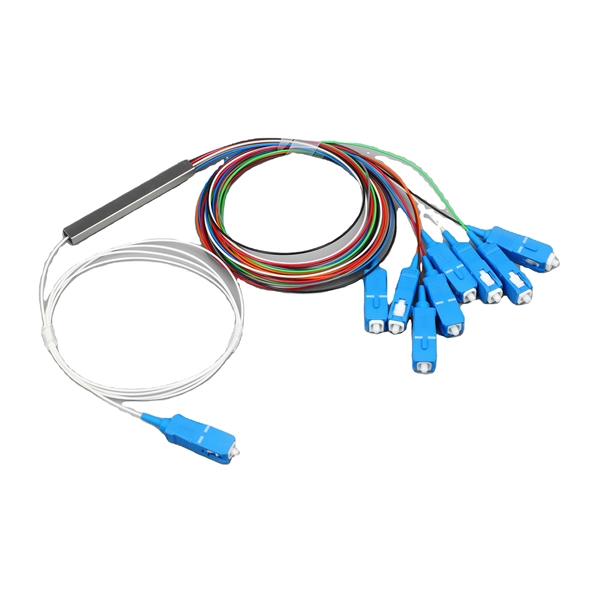
It is ideal for routing optical digital audio in live performance systems, network installations or recording studios of any size. A fiber-optic splitter, also known as a beam splitter, is based on a quartz substrate of an integrated waveguide optical power distribution device, similar to a coaxial cable transmission system. The optical network system uses an optical signal coupled to the branch distribution. Optical splitter. A fiber optic splitter is a passive optical component that divides a single incoming optical signal into two or more outgoing signals, or combines multiple incoming signals into one. Conversely, it can also combine multiple signals into one. For example, optical splitters send light to many output ports. This lets you connect more users to one network terminal.
[PDF]
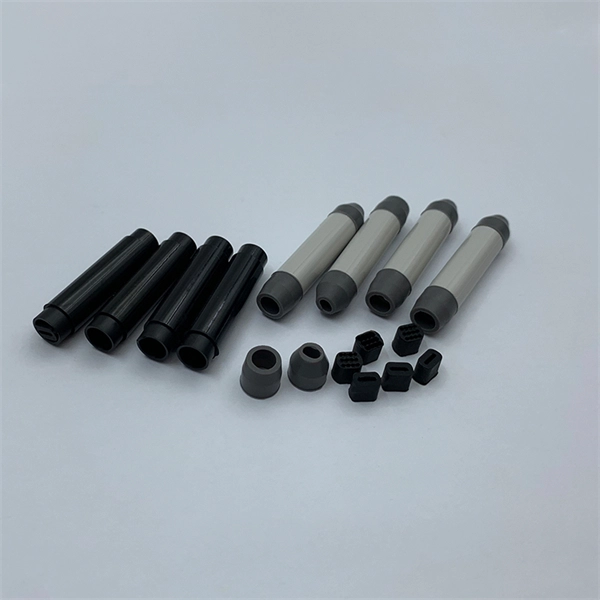
Beamsplitters are commonly used in a wide range of optical systems to guide light in specific paths, allowing multiple measurements, imaging, or detection systems to work simultaneously. A beam splitter or beamsplitter is an optical device that splits a beam of light into a transmitted and a reflected beam. It is a crucial part of many optical experimental and measurement systems, such as interferometers, also finding widespread application in fibre optic telecommunications. This passive device uses a specialized surface designed to both reflect and transmit light simultaneously. The resulting beams are directed along different paths, allowing a single light. Beam splitters can be modeled either in Sequential Mode or Non-Sequential Mode in OpticStudio. In Non-Sequential Mode, rays can split into transmitted and reflected rays at an object interface. a laser beam) into two (or sometimes more) beams, which may or may not have the same optical power (radiant flux). Different types of beam splitters exist, as described in the. Thanks to beamsplitters, this is no longer an area of mystery. Beamsplitters are a useful tool that allow us to control various light waves, enabling us to combine and separate different wavelengths of light with ease. What are beamsplitters and how are they used in optics and photonics.
[PDF]
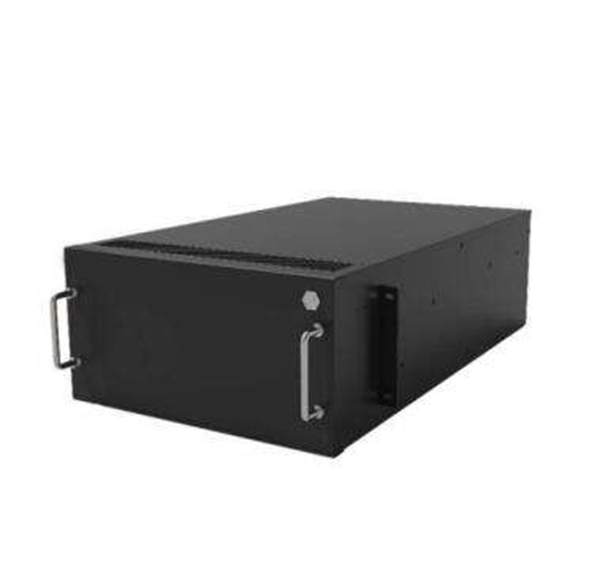
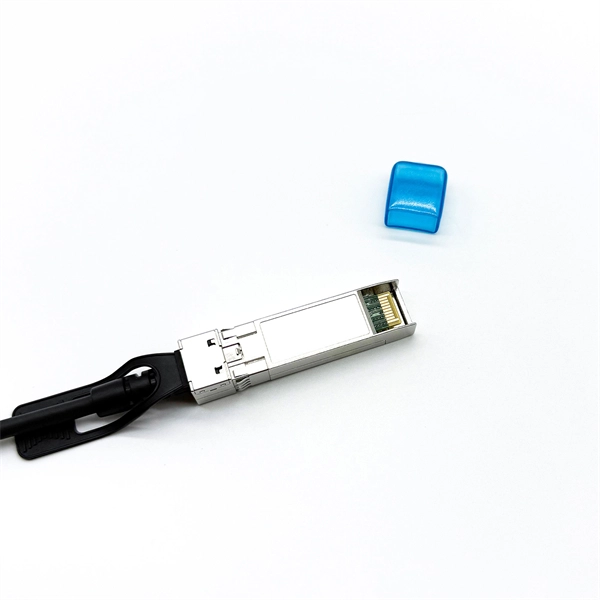
An optical module is a typically hot-pluggable optical transceiver used in high-bandwidth data communications applications. SFP (Small Form-factor Pluggable) is a compact, hot-pluggable network interface module used to connect network devices (switches, routers, firewalls) to fiber optic or copper cables. Optical modules typically have an electrical interface on the side that connects to the inside of the system and an optical interface on the side that connects to the outside. What is an Optical Transceiver and what is its primary function? An optical transceiver is a modular device that serves as both a transmitter and a receiver (hence the name). It plugs into network equipment (like switches, routers, or servers) and its primary function is to convert electrical. In the world of fiber optic communications, optical transceiver modules play a pivotal role as interfaces that convert electrical signals to optical signals and vice versa. What are the roles of Optical Transceivers? As a transmission medium between network devices, the optical module is a necessary hardware device for long-distance communication. Its. Every piece of data traveling across a fiber optic network passes through an optical transceiver. These small, hot-pluggable modules are the bridge between electrical signals inside your networking equipment and the light pulses that race through fiber optic cables at near light speed.
[PDF]
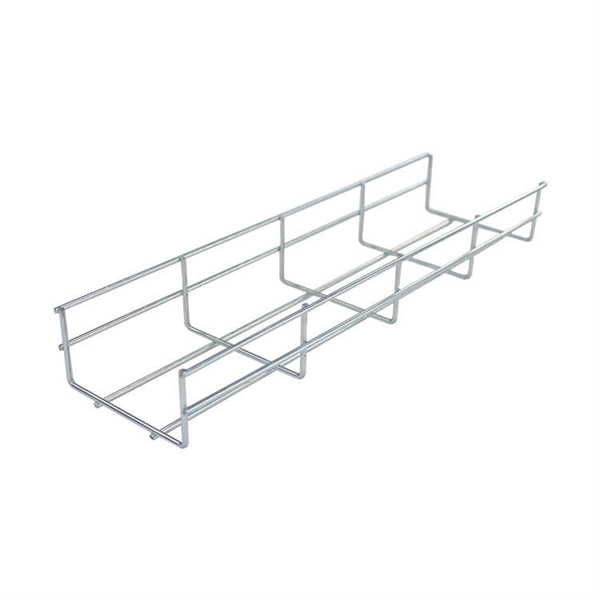
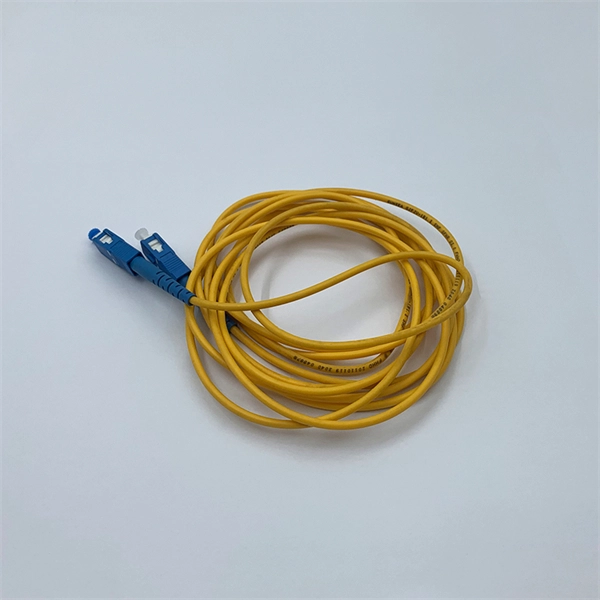
A variety of optical fiber connectors are available, but SC and LC connectors are the most common types of connectors on the market. Typical connectors are rated for 500–1,000 mating cycles. The main differences among types of connectors are dimensions and. An optical fiber connector is a device used to link optical fibers, facilitating the efficient transmission of light signals. They come in various types like SC, LC, ST, and MTP, each designed for specific. Fiber connector types LC, SC, FC, ST, MTP, and MPO are widely used in past and present. What are the differences between them? Who is the most popular one? Find the answer in the article. What is a Fiber Connector? The optical fiber connector is a kind of detachable passive optical component used. Fiber optic cable assembly quality hinges on selecting the right connector type—most commonly LC, SC, or ST—to match device ports and installation environment. When selecting the appropriate optical module for a network application, one crucial factor to consider is the type of fiber connector it employs. Fiber optic connectors are used to the mechanical and optical means for cross connecting fibers. There have been many types of connectors developed for fiber cable. With the demands of different application scenarios.
[PDF]
Busbar connection is the most common electrical connection method in distribution boxes. A busbar is a large-section conductive metal strip, usually made of copper or aluminum. Bus connection methods are divided into two types: hard bus connection and soft bus connection. Distribution panels, breaker panels, load center, and/or distribution boards—any name you call them, they're a key part of every electrical system. Wiring distribution panels serve as the central hub and nerve center, routing power from the main service feed to multiple circuits. Single Phase Distribution Box generally consists of Double Pole MCBs, Single Pole MCBs, and RCCBs. Below, we break down the most common types of DB boxes based on phase type, number of ways, mounting method, and use case. Single-phase vs Three-phase DB Boxes Used in most residential buildings and small offices. It takes the incoming power and safely distributes it to different circuits throughout your building.
[PDF]