The IEEE standard for the base PoE switches is 802. 3at for PoE+, and 802. PoE and PoE+ transmit power over two pairs of twisted-pair wires in their cables, while the PoE++ variants use four pairs of twisted-pair wires. The splitter is the silver and black box in the middle between the wiring junction box (left) and the access point (right). The PoE connection eliminates the need for a nearby power outlet. In another common configuration, the access point or other connected device includes internal PoE splitting. Power over Ethernet (PoE) switches combine data and power delivery into a single Ethernet cable, simplifying deployment of devices such as access points, IP cameras, VoIP phones, and IoT equipment. PoE does not reduce network speed, does not waste excessive power when proper cabling standards are. Therefore, everyone is concerned about whether PoE switches will affect speed. Key Benefits of Power over. PoE switches (Type 1) comply with the IEEE 802. 3af standard, which specifies the maximum power delivered over Ethernet cables.
[PDF]
This guide will equip you with a systematic approach to diagnosing and resolving the most common optical link performance issues. By understanding the root causes, you can minimize downtime and ensure your network operates at its peak efficiency. When issues like signal loss, slow speeds, or intermittent connectivity arise, systematic troubleshooting is key. Why Do Fiber Networks Fail? Despite their robustness, fiber networks can fail due to:. This document describes how to troubleshoot fiber optic interfaces by addressing some of the fiber optic module and cabling specifications. There are no specific requirements for this document. The information in this document is based on all Catalyst 9000 Series switches. This includes Doppler. Fiber optic troubleshooting is an essential skill for network administrators, technicians, and engineers responsible for maintaining and repairing fiber optic systems. I switched to ATT fiber from Xfinity because usually fiber optic is faster. However I've had fiber optic for 2 days, and my gateway is constantly disconnecting from the network. I know the technician said something about. Optical fiber networks are essential for delivering high-speed internet and reliable communication. Despite their advanced technology, these networks can encounter problems that impact performance. Effective troubleshooting is crucial to maintaining a smooth and efficient network. This blog post.
[PDF]
The core switch functions as the central point of the entire network, forming the high-speed backbone for the organization's data infrastructure. Its primary purpose is to provide an optimized and reliable transmission structure for all aggregated data traffic. Simply put, it's the kingpin that keeps your network humming. You may also want to know: Can a Nintendo Switch Play DS Games? ·. A network switch connects multiple devices within a local area network (LAN) and directs data packets only to their intended destination. In large organizations, networks become complex, exchanging massive amounts of data. The core switch is the most important piece of hardware in this. A core switch is a high-capacity, high-performance Layer 3 switch positioned at the physical backbone of an enterprise network. Engineered to aggregate massive volumes of data from distribution switches, it provides ultra-low latency and maximum throughput to ensure uninterrupted routing and packet. A core switch is a crucial component of a network infrastructure that serves as the backbone of a network. It's a high-performance switch that provides high-speed connectivity between different network segments, which may include access switches, distribution switches, and routers. These switches are high-capacity, usually handling the greatest amount of traffic compared to other switches in the network. They primarily focus on speed.
[PDF]
This data sheet describes the benefits, specifications, and ordering information for the Cisco Catalyst 9200 Series Switches. Default (Normal mode) : All ports can communicate with each other, VLAN (Secure mode): Downlink ports can communicate only with uplink ports. Enabling PD keepalive function, the switch will restart the IPC via PoE power when the IPC sends no message in a period of time, Extend (Surveillance mode):. New Taipei, Taiwan, May 19, 2025 - UFISPACE,a global leader in open networking solutions, has partnered with GIGABYTE to exhibit advanced data center switches at COMPUTEX 2025 (Booth No: K0802, Taipei Nangang International Exhibition Center, Hall 1). Featuring state-of-the-art Broadcom chipsets. Take advantage of limited-time promotions and offers on Cisco Catalyst Switching. Upgrade now and enjoy the savings. Cisco ® Catalyst ® 9200 Series switches extend the power of intent-based networking and Catalyst 9000 hardware and software innovation to a broader set of deployments. With its. PoE is a technology for wired Ethernet LANs to carry electric power required for the device in the data cables. 3af PoE standard provides up to 15. 4 W of power on each port. If you have switches. Max. PoE Power EXTEND (Surveillance mode): Transmission distance up to 250 meters. 3bt compliant devices such as IP cameras, VoIP phones, and wireless access points. When connecting network.
[PDF]
Power over Ethernet (PoE) is a technology that enables the transmission of electric current and data simultaneously over Ethernet cables, eliminating the need for separate power cables. This section wil.
[PDF]
There are more than ten proprietary implementations. The more common ones are discussed below. Some Cisco WLAN access points and supported a proprietary form of PoE many years before there was an IEEE standard for delivering PoE. Cisco's original PoE implementation is not software upgradeable to the IEEE 802.3af standard. Cisco's original PoE equipment is capable of delivering up to 10 W per port. The amount of power to be delivered is negotiated between the endpoi.
[PDF]
MDC virtualizes one S7500X switch into multiple logical switches, enabling multiple services to share one core switch. The 1:N virtualization maximizes switch utilization, reduces network TCO, and ens.
[PDF]
When selecting an SFP module, consider the following factors: Ensure the module matches the speed of your switch or router port (e. Depending on your deployment, choose 850nm, 1310nm, 1550nm, or even CWDM/DWDM wavelengths. SFP (Small Form-factor Pluggable) is a compact, hot-pluggable network interface module used to connect network devices (switches, routers, firewalls) to fiber optic or copper cables. Think of it as the “translator” for your network equipment, converting electrical signals into optical signals. SFP optical modules are the unsung heroes of fiber networking—the essential interface that converts electrical signals from network equipment into optical signals for transmission over fiber optic cable, and vice-versa. Choosing the wrong SFP optical module can result in link failure, instability. Optical transceivers are at the heart of modern fiber networks - connecting switches, routers, and servers with blazing-fast links. Cisco's SFP, SFP+, and XFP modules are among the most widely used standards across enterprise and carrier environments. They determine data rate, transmission. With our expert guide, you can easily maximize network performance while optimizing your expenses the next time you're choosing a switch/router, optic, or supporting cabling. It converts electrical signals into optical (or copper) signals and vice versa. It allows network administrators to adapt hardware to different media types and.
[PDF]
The system in this example contains the following elements: 1. 2 Pseudo-random Bit Stream (PRBS) block 2. 2 NRZ Pulse Generator (NRZ) 3. 1 CW Laser (CWL) 4. 3 1x2 Fork (FORK) 5. 2 Electrical Not Gate (N.
[PDF]
Quick Answer: To check CPU utilization on a Cisco switch, use the command “show processes cpu” in the CLI. This displays current CPU load, CPU usage history, and process-specific details, aiding in network performance troubleshooting. The CPU becomes too busy when either an IOS process consumes too much CPU time or the CPU receives too many packets from the switching hardware. When either of these two CPU consumers requires the CPU resource to the detriment of the other, then the CPU is too busy. For instance the CPU is. High CPU utilization on Cisco switches can lead to degraded network performance, packet loss, and even switch failures. Identifying and troubleshooting the root cause of high CPU usage is essential for maintaining a healthy network. In this article. I noticed that after having VLANs, ClearPass, spanning tree, and all other settings configured, that CPU util was just sitting at or above 85% on all these switches. I updated firmware to the latest version on all of them, but that didn't help. Problem analysis process 1. According to the switch logs, after searching for related processes, we can find that the. my switch core has high CPU usage every 3 minutes, switch logs attached. Do the outages/CPU spikes occur at the same time as the log entries appear such as : 00828 lldp:. Thank you, Fix the problem indicated.
[PDF]
This guide delves into the essence of stackable switches, their advantages, and how to effectively manage and troubleshoot them. This table provides release and related information for the features explained in this article. These features are available in all the releases subsequent to the one they were. Cloud managed switching supports several types of switch stacking on select switch models. Switch stacking allows several switches to be managed as a single, larger switch which can forward traffic over dedicated stack links rather than front-side network links. In some cases, power redundancy. Among various configurations, the concept of switch stacking—particularly with Cisco switches —stands out as a robust solution for streamlining network management and enhancing performance. Stackable switches logically to become one switch. The major benefits of stacking. Yes., the core connects to distribution layer and distribution connects to access layer switches. For switch to be in HA, we need to do stacking right or Hsrp might work but for cisco catalyst switch there is no hsrp. For example, if you have five individual Cisco switches, the Switch Stacking allows you to use all of them as a single large switch.
[PDF]
In this guide, we will walk you through the process of setting up a network switch, from selecting the right equipment to connecting and testing the network. Ethernet switches, also called network switches, connect multiple devices via Ethernet cables. In contrast, a router connects your local area network (LAN) to the internet's. A practical, current guide to planning, pulling and terminating Cat6/Cat6A cable — tools, techniques, testing and labeling for reliable results. By Thomas McCormack • Updated Mar 17, 2026 • 12 min read • Lead Technician and Engineer, Data Wire Solutions Disclosure: Some links may be affiliate. With an Ethernet cable, you can hardwire your devices to your network, providing fast and efficient. Your ethernet switch doesn't come with any ethernet cables, so you want to have some on hand when setting up your switch. You'll need one cable to connect your ethernet switch and router together (assuming you want to provide your devices with an ethernet connection to the internet), and an. A network switch is a crucial component in any modern network, enabling seamless communication between devices. By the end of this tutorial. Connecting a network switch involves physically connecting devices using Ethernet cables and configuring them as needed, ultimately expanding your network connectivity and improving network performance. Connecting a network switch is a foundational skill for anyone managing a home or small business.
[PDF]
This article helps enterprise network owners, data center managers, and field engineers estimate total cost of ownership for a 400G rollout while avoiding the common “buy the fastest optics” trap. The Brazil 400G Switch Market is positioned at a pivotal growth juncture driven by escalating data center demands, cloud infrastructure expansion, and 5G network rollouts. As digital transformation accelerates across Latin America, Brazil emerges as a key regional hub for high-speed networking. Brazil's Fiber Optic Connectivity market is projected to reach approximately USD 2. 5 billion in 2026, driven by rapid 5G densification and hyperscale data center expansion in São Paulo and Rio de Janeiro. FTTx access networks account for over 45% of total demand by volume, fueled by federal. As per analysis, the Brazil Ethernet Switch Market is projected to grow from USD 0. 184 Billion in 2025 to USD 0. 297 Billion by 2035, exhibiting a compound annual growth rate (CAGR) of 4. 98% during the forecast period (2025 - 2035). Universal Leaf & Spine Modular Spine High Network Radix Fixed Leaf & Spine for High. 400G and 800G Switches by Application (Large-scale Cloud Computing, Artificial Intelligence, 5G), by Types (400G Switch, 800G Switch), by North America (United States, Canada, Mexico), by South America (Brazil, Argentina, Rest of South America), by Europe (United Kingdom, Germany, France, Italy.
[PDF]
Check the steps ① whether the user network card is disabled, ② check whether the network cable is normal with a network cable tester, ③ replace the optical modem LAN port or other ports of the router and switch to test whether normal. Fiber optic networks are celebrated for their speed and reliability, but even the best systems can encounter problems. When issues like signal loss, slow speeds, or intermittent connectivity arise, systematic troubleshooting is key. This guide will walk you through diagnosing and resolving common. We have a fibre run, SM, 650 meters, with Level1 dumb switches at each end, I get Link lights at both ends, but there's no network traffic. Switch A is on the router end, devices connected to this switch get DHCP leases and can browse the internet without issue. These high-speed, high-capacity communication networks are increasingly replacing copper cables, offering superior performance and. However, even the most advanced fiber-optic networks can encounter issues that disrupt performance. This comprehensive guide delves into the most common FTTH problems faced by users, providing detailed troubleshooting steps and real-world solutions. Whether you're a network engineer, IT manager, or service provider, understanding these challenges and how to address them is critical for maintaining high-performance, reliable.
[PDF]
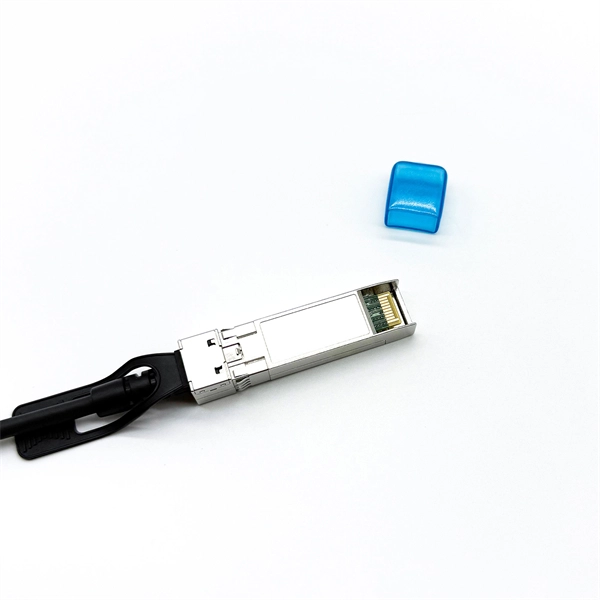
Most modern fiber-enabled network switches require an SFP transceiver module featuring a duplex (two strand) multimode OM3 or duplex single mode OS2 connection with LC connectors. Direct attach cables with pre-terminated SFP connections may also be used. Download the Application. CONFIGURING THE SWITCH IN DESIGO CC/CERBERUS DMS. CYBERSECURITY DISCLAIMER. 44. This tutorial will explain the steps required to configure fiber optics on a Cisco switch and ensure proper connectivity in your network. This chapter includes the following sections: •Information About Fibre Channel Interfaces, page 1-1 •Configuring Fibre Channel Interfaces, page 1-8 •Configuring Global Attributes for. : 192. 0 De livery of solutions fulfilling the Customers' multitude o. This document is intended to serve as a guide for architecting and deploying fiber optic networks in a customer environment. This installation planning guide describes some basic fundamentals of fiber optic technology, considerations for deployment, and basic testing and troubleshooting procedures. Fiber optic cabling is increasingly used to connect network switches and other datacom equipment, especially in long-distance and mission-critical applications. Fiber provides: Increased internet signal bandwidth.
[PDF]