This guide covers everything: what fiber optic pigtails are, how they differ from patch cords, which connector and polish type to specify, how to choose between mechanical and fusion splicing, and the real-world applications where pigtails are the right call. Today, I'll show you how to pick the right patch cord or pigtail — step by step. A Fiber Patch cord connects two devices. You plug it into a switch, router, or patch panel. It's ready to use out of the box. A pigtail is for splicing. You fuse it to a. What Is a Fiber Optic Pigtail? A fiber optic pigtail is a short length of optical fiber —typically 0. 5m to 2m—that has a factory-terminated connector on one end and bare fiber on the other end. The connector end is polished and tested under factory conditions, ensuring low insertion loss and high. Fiber Optic Pigtail by Unisol is a high-performance, precision-engineered component designed to ensure seamless optical fiber termination across a wide range of network environments. While it may seem like a simple. Could I have 3” in of wiring coming in then pigtail another 3”? Or do I need to have 6” coming in regardless as one wire then anything pigtailed is extra? I want to have minimal wire in there to eliminate any potential shorts. I'm using a 20cu in plastic box with 2 runs of 12/2 coming in Context:.
[PDF]
Open Frame Rack: A rack structure without doors or side panels, allowing easy access and better airflow. A data center server rack is the physical foundation of modern IT infrastructure, enabling the organized installation of servers, switches, PDUs, UPS systems, and structured cabling. There are three primary rack types - open-frame racks, enclosed cabinets, and wall-mount racks, each suited for. Understanding data center racks, chassis, and their differences is crucial for efficient server deployment. This guide clarifies common terminology confusion and design implications. Modern data center racks house multiple server chassis in standardized dimensions, enabling efficient space. IT racks are the backbone of any data center, housing critical infrastructure like servers, networking equipment, and storage devices. Whether you are designing a new setup or optimizing an existing one, understanding key IT rack terminologies is essential. This article provides an overview of the. A server rack, also known as a server cabinet, is a specialized metal frame structure designed to store and organize IT equipment. It supports hardware, enhances cooling, and ensures efficient power distribution. This guide covers everything you need for. Recommended (Suitable for all four classes; explore data center metrics in this paper for conditions outside this range. Classes A3, A4, B, and C are.
[PDF]
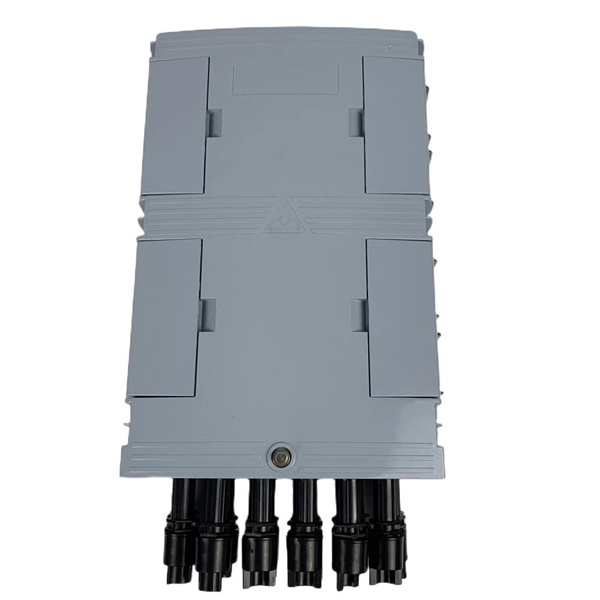
This terminal box supports up to 16 fiber optic ports, offering flexibility and durability for large-scale outdoor fiber projects. Check each product page for other buying options. Fiber Optic Wall Mount Box with LC Couplers for Single Mode & Multimode Fiber Optic Cable. | Fiber Box Enclosure for MPOE's, Network Rooms, and IDF Rooms. (LC 6 Strand OS1/OS2) Need help?. • Tool-free installation, quadruples deployment efficiency • Front-access adapter panel, Simplifies maintenance operations • Universal adapter compatibility, Supports FC/SC/LC connectors. SC Rack-Mount Empty Fiber Termination Box Embedded installation, cover plate design, supports 12/24-core. A Fiber Termination Box, also known as a Fiber Distribution Box, is a crucial component in fiber optic networks. It serves as a termination point for optical fibers, providing a secure and organized space for connecting and managing fiber optic cables. FTBs play a vital role in ensuring the. Our range of fiber termination boxes provide compact, robust, and easy-to-deploy termination solutions for indoor and outdoor applications. We ofer solutions for single dwelling unit (SDU) and multi-dwelling unit (MDU) configurations, and in-home including wall outlet-type fiber terminations. Designed as a compact enclosure, they support both cable splicing and termination while ensuring safe access for technicians.
[PDF]
The construction of cable tray angles often involves durable materials such as steel or aluminum, catering to the need for longevity and support. The design of angle support for cable tray systems can include.
[PDF]