Global electricity demand from data centers is set to more than double to 945 TWh by 2030, equivalent to Japan's current total power consumption, as artificial intelligence drives unprecedented growth in the sector's energy needs, the International Energy Agency said April 10. Today, electricity consumption from data centres is estimated to amount to around 415 terawatt hours (TWh), or about 1. 5% of global electricity consumption in 2024. It has grown at 12% per year over the last five years. The rise of AI is accelerating the deployment of high-performance accelerated. Artificial intelligence has developed rapidly in recent years, with tech companies investing billions of dollars in data centers to help train and run AI models. The expansion of data centers has raised questions on several fronts, including the effect these facilities may have on energy and the. In light of current developments in information and telecommunication network technology, the concept of the Energy Internet (EI) has been proposed. Many steps have been done recently to put the EI into practise. The Energy and AI report projects that data center consumption globally will grow to 945TWh per year by. Domestic energy usage from data centers is expected to double or triple by 2028. 20, 2024 Department of Energy news release A recent report produced by the Department of Energy's Lawrence Berkeley National Laboratory (Berkeley Lab), which outlines the energy use of data centers.
[PDF]
This article deals with a thorough investigation of the energy internet towards future emerging technologies for energy distribution and management to solve existing limitations and enhance the performanc.
[PDF]
KUALA LUMPUR, MALAYSIA (15 October 2025) – The Asian Development Bank (ADB), the World Bank Group, and the Association of Southeast Asian Nations (ASEAN) have launched a new financing initiative to support the ASEAN Power Grid (APG) – ASEAN's collective effort to connect the. KUALA LUMPUR, MALAYSIA (15 October 2025) – The Asian Development Bank (ADB), the World Bank Group, and the Association of Southeast Asian Nations (ASEAN) have launched a new financing initiative to support the ASEAN Power Grid (APG) – ASEAN's collective effort to connect the. Overview Following the directive of the 41st ASEAN Ministers on Energy Meeting (AMEM) to expand multilateral power trading efforts, the ASEAN region aims for greater power grid interconnectivity within the region. As part of the Lao PDR Chairmanship Priority Economic Deliverable (PED) on Energy #8:. As of December 2024, nine of the 18 priority interconnection projects under the APG are fully operational, contributing a total interconnection capacity of 7. First proposed in 1997 under ASEAN Vision 2020, the APG was conceived as a long-term strategy to interconnect power systems, facilitate. The Association of Southeast Asian Nations (ASEAN) has long envisioned a region-wide power grid as a pathway to lower energy costs, improve energy security, and accelerate integration of renewable energy across borders. Yet financing alone will not turn vision into voltage.
[PDF]
Energy Internet integrates small-scale renewable energy systems, electric loads, storage devices, and electric vehicles for effective transaction of power backed by emerging technologies such as Internet of Things, vehicle-to-grid, and blockchain. Energy Internet, a futuristic evolution of electricity system, is conceptualized as an energy sharing network. Its features, such as plug-and-play mechanism, real-time bidirectional flow of energy, information, and money can lead to significant benefits and innovation in electricity production and. Then, we propose a new universal definition of the EI by bringing together the various existing definitions and concepts in light of the upcoming smart grid. We also pinpoint the fundamental technologies responsible for ITM University Gwalior, India. coordinating and. Our research addresses the critical intersection of communication and power systems in the era of advanced information technologies. We highlight the strategic importance of communication base station placement, as its optimization is vital for minimizing operational disruptions in energy systems. Energy Internet,sponsored by Chinese Society for Electrical Engineering (CSEE), and published by China Electric Power Research Institute (CEPRI) in cooperation with the Institution of Engineering and Technology (IET), is a multidisciplinary gold open access journal covering power and energy, power.
[PDF]
The results shown on the following slides are from the project's four key scenarios with harmonized CO2 prices. This assumes the countries of Central Asia all commit to substantial decarbonization in the long run. r stan ur menistan anistan ur menistan r stan aji istan dro. With $12. 5B pledged, the Climate Investment Funds is one of the largest active climate finance mechanisms in the world. OF CIF APPROVED PROJECTS Subscribe to CIF's monthly newsletter to receive the latest updates from CIF. Energy and critical raw materials offer the most viable and mutually beneficial anchors for long-term cooperation. Regional cooperation is accelerating as Central Asian states resolve long-standing. A report co-authored by an SEI expert, using SEI's flagship energy modelling tools, finds that improved energy connectivity in Central Asia can save the region at least USD 1. 4 billion annually by 2050. The moment is ripe for the Central Asian governments to develop a strategic vision and reach formal agreements on energy, water, and climate at a regional level. We offer you details on the share of exporting markets, supplying markets.
[PDF]
This article deals with a thorough investigation of the energy internet towards future emerging technologies for energy distribution and management to solve existing limitations and enhance the performanc.
[PDF]
The Energy Internet represents a transformative paradigm integrating advanced power systems, distributed renewable energy, and digital technologies to achieve efficient, resilient, and sustainable energy management. In the next 20 years, almost three billion people will join the middle class, propelling global demand for more and better housing, televisions, cars, food, water, energy, and myriad other goods and services. But, with increasing strain on the planet's resources, meeting this demand could carry. Advancing the Energy Internet: Innovations and Solutions for a Sustainable. It integrates distributed renewable sources, storage, EVs, and smart buildings, allowing them to exchange data and power in real-time to enhance. Abstract—This paper focuses on the management of the electricity grids using energy packets to build the Energy Internet via machine-type communications. We revisit some attempts to design a digital grid similar to the internet, including packetized management of specific loads (electric vehicles.
[PDF]
Energy Internet integrates small-scale renewable energy systems, electric loads, storage devices, and electric vehicles for effective transaction of power backed by emerging technologies such as Internet of Things, vehicle-to-grid, and blockchain. Abstract: In order to evaluate the integrated energy system under the background of energy Internet, the assessment index system is firstly constructed based on the energy consumption, economy, environment, availability, reliability, feasibility of the integrated energy system, and using the. Energy Internet, a futuristic evolution of electricity system, is conceptualized as an energy sharing network. Its features, such as plug-and-play mechanism, real-time bidirectional flow of energy, information, and money can lead to significant benefits and innovation in electricity production and.
[PDF]
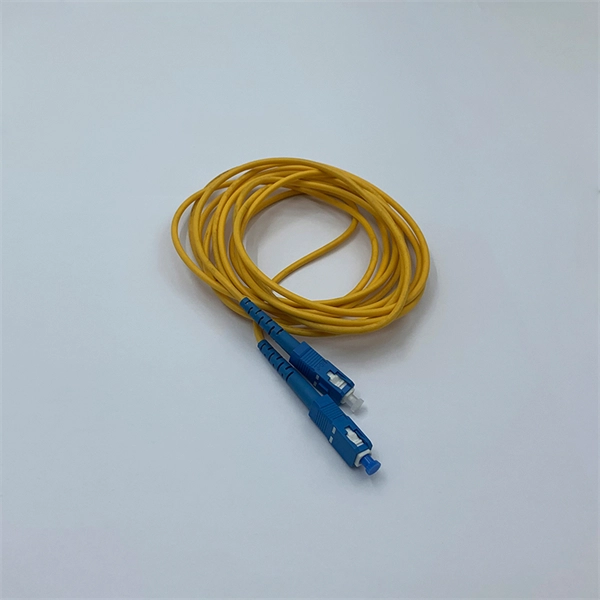
Easily filter for specific Wavelengths services, locate Points of Presence (PoPs), and submit your enquiry directly via our interactive map. Wavelength Division Multiplexing is a technology utilized in fiber optics that allows multiple laser sources to broadcast through a single fiber. A WDM enables a single fiber to broadcast Bi-Directionally and increase bandwidth by a factor of the number of light sources utilized. There are sub. Corning's R&D scientists are constantly searching for new ways to improve wavelength division multiplexing (WDM) technology. Close collaboration with our customers and our proven expertise across fiber, cable, and connectivity ensure you'll get solutions that are smarter, denser, faster, and easier. Wavelength division multiplexers (WDMs) are used to combine light of different wavelengths into a single fiber. The light from each fiber is first collimated. The collimated beams are then combined using a dichroic filter, with typically the longer wavelength transmitted from port T, the shorter. Wavelength Division Multiplexing (WDM) is the process of using different colors of light to transmit multiple data streams through fiber optic cable. Since the different colors of light have different wavelengths, they do not interfere with each other. These devices combine light of different wavelengths into a single fiber using dichroic filters, making them ideal for applications such as confocal microscopy, white light imaging.
[PDF]
The following transactions are subject to VAT when performed within Nicaragua: 1. Supplies of goods. 2. Supplies of services. 3. Importations of goods. 4. Exports of goods and services. VAT is imposed at a 15%.
[PDF]
The Energy Internet represents a transformative paradigm integrating advanced power systems, distributed renewable energy, and digital technologies to achieve efficient, resilient, and sustainable energy management. This article offers a perspective grounded in a deep understanding of what's at stake: the reliability of our energy infrastructure, the safety of communities and the speed of innovation in the global energy transition. As global decarbonization efforts intensify, the Energy Internet's core. The large-scale deployment of 5G is accompanied by an exponential increase in network energy consumption. At the same time, the country has put forward the “dual-carbon" strategic requirements of “carbon peak" and “carbon neutrality", so it is urgent to achieve energy-saving and emission reduction. In light of current developments in information and telecommunication network technology, the concept of the Energy Internet (EI) has been proposed. Many steps have been done recently to put the EI into practise. These EI models have a lot in common, and yet no one has settled on a single.
[PDF]
Both policymakers and the technology industry need to do more to combat the ever-growing demand for data and its associated energy impacts. In this study, based on novel corporate data, expert interviews.
[PDF]
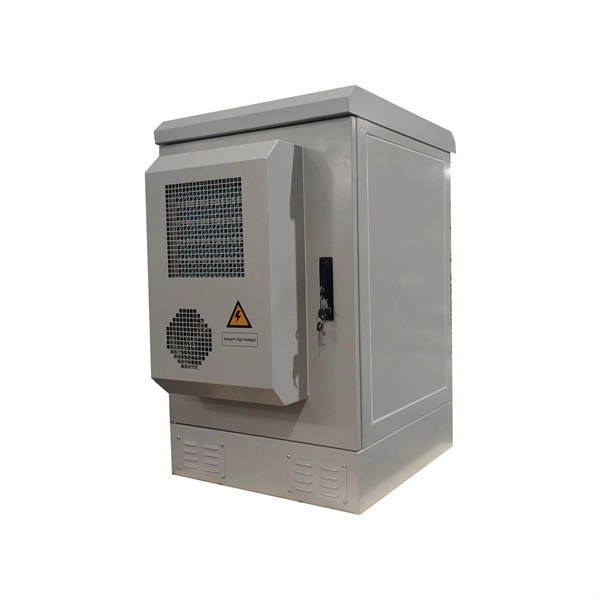
The Cabinet offers flexible installation, built-in safety systems, intelligent control, and efficient operation. It features robust lithium iron phosphate (LiFePO4) batteries with scalable capacities, supporting on-grid and off-grid configurations for reliable energy storage. This supplier offers full customization, design customization, and sample customization services, and has product certifications. The high positive review rate and all positive reviews demonstrate their reliability. Supports. The EK indoor photovoltaic energy storage cabinet is a photovoltaic system integration device installed in indoor environments such as communication base stations. Its core function is to convert the direct current generated by photovoltaic modules into alternating current, while realizing the. All - in- one C&I Battery Energy Storage System K100G215C All-in one C & I Energy Storage System higher integrates LiFePO4 Battery, BMS, PCS, EMS, Fire protection system, temperature control system and cloud platform. The system adoptes an intergrated and innovative design with higher safety. Namkoo NKB Series 215kwh commercial & industrial energy storage system adopts the all in one design concept. This fully integrated 100kW/215kWh system combines high-density battery storage with intelligent power management in a single, factory-assembled unit - delivering unmatched performance and.
[PDF]
Major tech companies (e., Google, Microsoft) aim for 100% renewable energy by 2030 (2023 commitments). Reduces paper use (saving ~2 million tons annually) and enables remote work, cutting commuting emissions. Cloud computing is ~80% more energy-efficient than on-premise data. Major tech companies (e. Manage the environmental impact of your digital products. Apply best practices in digital sustainability. Advocate for a more sustainable and just internet. Are you a hosting provider. Answering this question is at the heart of the so-called “Third Industrial Revolution,” which seeks to integrate renewable energy sources with Internet connectivity, develop digital manufacturing technology, and support green industry. In other words, the goal is to achieve sustainable production. Ecology is the study of relationships between living things and their environment across all scales, from blue whales in the ocean, to bacteria living on the surface of a leaf. It encompasses all life processes, interactions and adaptations; community structure and composition; competition and. Major tech companies (e. The environmental footprint of the internet is substantial, with data. Karen is an energy efficiency and sustainability specialist with 20+ years experience. She exposes unsustainable businesses, products, and processes, and looks for ways we can all buy better - for ourselves and for the planet. Every time we go online to visit a website, stream a TV show, catch up.
[PDF]
Based on electrical power systems, leveraging renewable energy generation technology, and information technology, the energy internet fuses power grids, gas networks, heat/cold supply networks, electri.
[PDF]