This AutoCAD DWG file includes a complete Single Line Diagram (SLD) of a Distribution Board, showing circuit breakers, wiring connections, and load distribution for lighting, power, and mechanical systems. An electrical panel box, also known as a breaker box or a distribution board, is a crucial component of any electrical system. It serves as a central hub for distributing electricity throughout a building, ensuring that power is delivered safely and efficiently to all the required locations. And all the switching and protective devices are installed in the. A distribution box is a key part of electrical systems in buildings. Inside, you'll find parts like circuit breakers and fuses that protect the system from problems like overloads and short circuits. Today, electrical systems are essential for homes and industries. Electrical Distribution board is used for controlling of utilization of power in the end point like as lighting circuit, power circuit and other equipment like as TV, fridge and airconditioning. The incomer supply is received from distribution panel. In this board, balance load is distributed as.
[PDF]
Smart circuit breaker boxes offer advanced features like energy monitoring, remote control, and enhanced safety compared to traditional breaker panels. Smart circuit breaker boxes are electrical control devices that integrate smart technology and provide remote monitoring and. Today's smart electronic circuit breakers and electronic trip units, like those represented in ABB's SACE® Tmax XT and Emax 2 breakers, represent a distinct shift in how you might deploy and manage smarter power distribution solutions. In this guide, we will explore the definitions, types, functions, and applications of intelligent circuit breakers. Intelligent circuit breakers. Regular circuit breakers offer essential protections like overload protection, short circuit protection, and leakage current protection: Overload Protection: This feature safeguards the circuit from excessive currents that can occur when too many devices are connected or a device is faulty. Upgrade your home's electrical system today. The GRD9S-F100 is a smart Smart MCB equipped with RS485 communication, designed for intelligent power distribution and energy. Smart circuit breakers are becoming essential for modern homes in 2025 – With rising energy costs and increasing smart home adoption, these devices offer 5-30% energy savings through real-time monitoring and automated load management, making them a valuable investment for homeowners looking to.
[PDF]
In this video, we'll walk you through the process of wiring a home distribution box with a detailed connection diagram. Understanding the cable TV house wiring diagram can be helpful when troubleshooting connection issues or setting up new TV sets in your home. Whether you're an electrician or a DIY enthusiast, this guide will help you understand the basics of home electrical distribution. more Welcome to our channel! In this video. This course was adapted from the Department of Energy, Publication No. DOE-HDBK-1011/2-92, “Electrical Science”, Module 15, which is in the public domain. Gussow, Milton, Schaum's Outline Series. Distribution board is a safe system designed for house or building that included protective devices, isolator switches, circuit breaker and fuses to safely connect the cables and wires to the sub circuits and final sub circuits including their associated Live (Phase) Neutral and Earth conductors. Once this is identified, the wiring diagram should be drawn up, showing the main power line coming from the utility source and then branching off to the various branch circuits. This diagram should also indicate the type of circuit breaker used on each branch circuit. In addition to the main power.
[PDF]
Simple 3-phase distribution board wiring diagram for home use, showing safe connection of power supply, breakers, neutral, and earth for residential electrical systems. Hey, in this article we are going to see the Three (3) Phase Distribution Board Wiring Diagram and Connection Procedure. The three-phase distribution board is used to distribute power to the three-phase loads and circuits such as three-phase motors, three-phase machinery, three-phase to. In a newly constructed residential area, a 10kV power line is introduced into the substation. After stepping down the voltage through the transformer's low-voltage side (0. The following is a detailed introduction about it: - **First-level Distribution. Utilities may have some control over and access to the energy stored in electric vehicles attached to the grid. ndards and conformity assessment activities in the United States. ANSI facilitates and promotes voluntary consensus standar rty or economic loss due to fire, electrical and related hazards. They deliver information and knowledge through more than 300 consensus codes and nspection to protect people.
[PDF]
Check the electrical load and ensure that the sensors do not exceed the 10 Amp maximum. Check each wire for damage that may lead to a short. Check the tightness of electrical connections along the power. Understanding how to safely and effectively test a breaker box with a multimeter is a crucial skill for any homeowner or electrician. Regular testing can help identify potential problems, prevent electrical hazards, and ensure the reliable operation of your electrical system. Ignoring this vital. When devices in your new box don't work, you start by testing the circuit. You will want a voltage tester (doesn't need to be a voltmeter) for this job. The very cheapest one you can find at a local hardware store (or online) will work great. In the merger we can see a red wire and a black wire connect the red wire to the megger's line terminal and then. This article summarizes inspection of the building electrical panel, main panel, or electrical distribution and sub panels. A continuity tester is the simplest tool for the specific task of checking for continuity.
[PDF]
The total interruption time for a modern high-voltage SF6 circuit breaker is typically between 40 to 60 milliseconds on a 50Hz grid, or 2 to 3 cycles. This is the total time from the trip signal to the final arc extinction, a critical parameter for grid safety. While knowing the total time is a. When a SF6 circuit breaker (CB) hits its critical low pressure, its fault interrupting capability can be compromised. Most TOs protect against this by either auto-opening the CB prior to reaching the critical low-pressure level or by blocking the CB from tripping (when it reaches the critical. The protected zone is defined and limited by different things depending on the protection function. Definite time delay means that the protection operate time dose not change or depend on the fault type or the fault current magnitude. Instead of oil, air, or a vacuum, a sulfur hexafluoride circuit breaker uses sulfur hexafluoride (SF 6) gas to cool and quench the. Page 1 Content Instruction Manual circuit- breaker GL317 With spring operating mechanisms FK3- 4 Administrator First issue Compiled by Approved by 19- 11- 2012 J. Texier Imagination at work Grid Solutions 04- 2017 D1736EN/03 GE Information 1/10. Page 2 Content Instruction Manual This. A comparison of the time it takes protective devices to operate when certain levels of normal or abnormal current pass through them. LV circuit breaker ratings.
[PDF]
Electric recommends these steps to restore power safely when your circuit breaker trips. Turn off and unplug devices on the affected circuit. Locate your electrical panel and identify the tripped breaker. Reset the breaker by switching it fully off, then back on. To effectively troubleshoot a tripping breaker, you should begin by identifying potential causes, such as overloaded circuits, short circuits, or faulty wiring. With a little investigation, you can often pinpoint the issue before considering a call to a professional. One of the most common and easily fixable problems is a tripped. Mr. Plug in devices one at a time. A tripped circuit breaker is usually a sign that there's too much electrical load on the circuit, or there's a short circuit somewhere in the system. Understanding how to troubleshoot a tripped circuit breaker is essential for any homeowner or DIY enthusiast, as it can help you safely restore. A circuit breaker is an automatic electrical safety device designed to protect your home's wiring and connected appliances from damage caused by an overcurrent condition. Once a circuit breaker trips, you cannot use any switches, outlets, or any fixture it serves.
[PDF]
If your breaker box lacks a main breaker 3, look for a split-bus panel 4 design with up to six main disconnects at the top section, or check outside for a separate main disconnect near your meter. In emergencies, you may need to shut off multiple breakers. Older homes often have panels that predate modern requirements, and in some cases, subpanels or unique building designs eliminate the need for a main breaker. An electrical panel, often called a breaker box or distribution board, is a critical component of a home's electrical system. It serves as. The distribution box (DB box) helps safely and efficiently distribute electrical power. Today, electrical systems are essential for homes and industries. What size distribution box do you need for a house? How do you know which circuit breaker to use? Can you add more breakers later? Why do you need GFCI or AFCI breakers? Choosing the right size and setup for your distribution box keeps your electrical system safe and working well. Also called a distribution board, panel board, breaker panel, or electric panel, it is the central hub in an electrical system that divides incoming power into various subsidiary circuits. I contend that in order to disconnect the power to the distribution panel, you have to open both the normal and generator circuit breakers (cannot be disconnected by a single breaker). The main disconnect is usually 200 amps but can sometimes be as low as 100 amps.
[PDF]
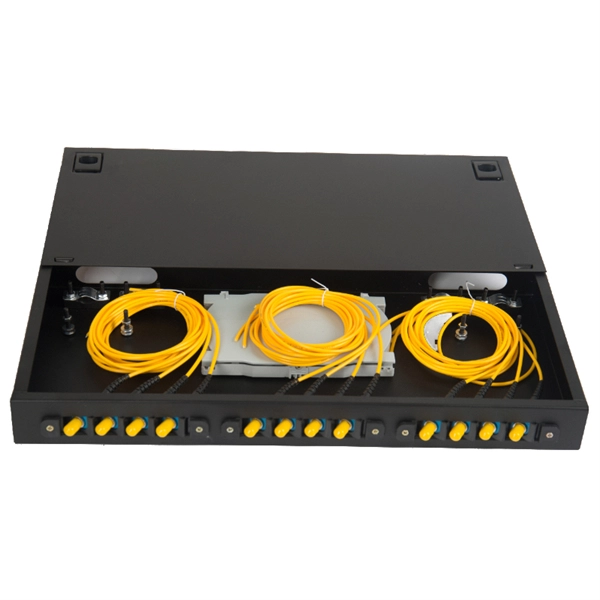
This report studies the global Optical Module PCB Board production, demand, key manufacturers, and key regions. Optical Module PCB Board by Application (Optical Receiving Module, Optical Transmitting Module, Optical Transceiver Module, Optical Forwarding Module), by Types (Single-layer PCB, Double-layer PCB, Multi-layer PCB), by North America (United States, Canada, Mexico), by South America (Brazil. Dongshan Precision plans to acquire Taiwan's Source Photonics for up to $850 million to expand its optical communications business. The deal, which aims to integrate Source Photonics' vertically integrated operations and high-speed optical module capabilities, is pending approval from Taiwan's. The Optical Module PCB Board market is experiencing significant growth, driven by the increasing demand for high-speed data transmission in various industries, including telecommunications, data centers, and consumer electronics. These printed circuit boards (PCBs) play a vital role in connecting. The global Optical Module PCB Board market size was US$ million in 2024 and is forecast to a readjusted size of US$ million by 2031 with a CAGR of %during the forecast period 2025-2031. The Optical Module PCB Board Market is expected to grow from 2,490 USD Million in 2025 to 5. 8 USD Billion by 2035. This report is a.
[PDF]
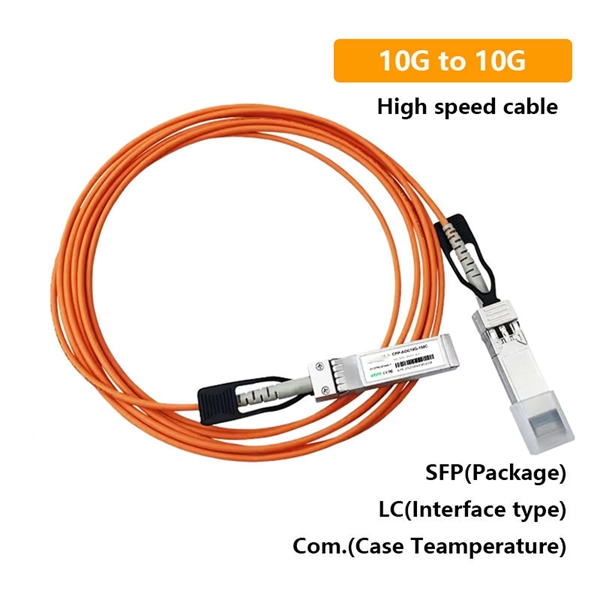
A relay protection tester is a core device used to verify the performance of relay protection devices. Its working principle can be summarized as “signal excitation – behavior detection. ”. Circuit principle of relay protection tester 1, input AC220V power output control relay K1 is approved by the insurance into the dual voltage regulator for T1 input carbon brush, through large knob to adjust the power into the isolation transformer T1 T2 (part-time riser), heat flow device points. When the transformer wiring type is Y/Y (Y0), the test wiring is very simple: when testing phase A, the tester IA is connected to the phase A of the high voltage side, and the tester IB is connected to the phase a of the low voltage side. ” The tester has a built-in high-precision programmable power supply, capable of simulating various operating. This handbook covers the code of practice in protection circuitry including standard lead and device numbers, mode of connections at terminal strips, colour codes in multicore cables, dos and donts in execution. The following is a detailed summary. This Playlist is assigned to sessions of protection Relays Principles. First, a description of Simple Functions.
[PDF]
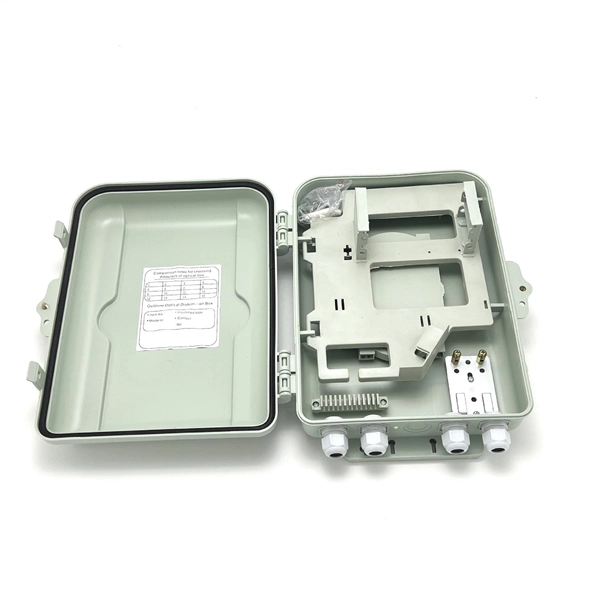
One-line diagrams and detailed network data (lines, transformers, buses). Short-circuit models, including fault current calculations under various system configurations. Protective relay settings and coordination curves. Historical. presentation of protection and control relaying. The report will identify methodology behind these practices, present issues raised by the integration of microprocessor relays and the internal logic and external communication configurations, ying. Schematic diagrams of protection relays are essential tools for power engineers in the power generation, transmission, and distribution industry. This includes AC schematics and DC schematics and diagrams that prominently feature relaying. There are other equally important types of drawings that are not the subject. Power System Protective Relays: Principles & Practices Presenter: Rasheek Rifaat, P. Eng, IEEE Life Fellow IEEE/IAS/I&CPSD Protection & Coordination WG Chair Jacobs Canada, Calgary, AB rasheek. com IEEE Southern Alberta Section PES/IAS Joint Chapter Technical Seminar - November 2016. Recognized under 2(f) and 12 (B) of UGC ACT 1956 (Affiliated to JNTUH, Hyderabad, Approved by AICTE - Accredited by NBA & NAAC – 'A' Grade - ISO 9001:2015 Certified) Maisammaguda, Dhulapally (Post Via. Kompally), Secunderabad – 500100, Telangana State, India To introduce all kinds of circuit.
[PDF]
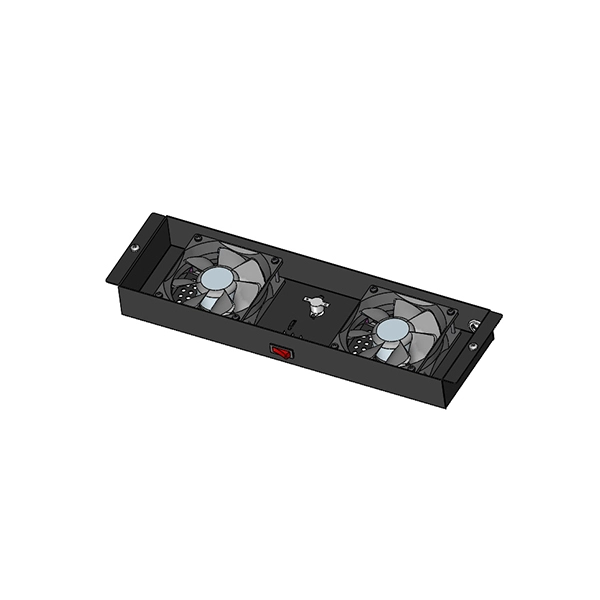
Simply put, a distribution cabinet is an enclosure that contains circuit breakers, relays, busbars, and monitoring devices. It ensures that electricity is delivered safely and efficiently to different sections of a building or facility. In electrical engineering, a power distribution cabinet refers. In this article, we explore seven essential components that play critical roles in power distribution cabinets. It acts as the main electrical pathway that distributes power from. While compliance and safety are major players in the move to busbar power, the need to optimize the use of space inside an industrial enclosure and the demand for faster, more efficient configuration and installation are also leading the charge toward busbar power. North America Copper Busbar. MCCB pan assemblies and busbars work together in distribution boxes to create a complete power distribution system. The pan assembly provides mechanical mounting and electrical connection points for circuit breakers, while busbars serve as the main conductors for power distribution, allowing. Internal components include: bus bar (bus bar), circuit breaker, conventional relay, integrated relay protection device, metering instrument, isolation knife, indicator light, grounding knife, etc. The following describes switchgear with application angle division and its power distribution related.
[PDF]
In this Shorts video, watch a step-by-step demo of installing riser bus bars and terminating MW cable joints for industrial electrical systems. Learn pro techniques for secure, durable connections and flawless finishing. Perfect for electricians, engineers, and electrical. Busbars are the unsung heroes of electrical panels, ensuring reliable power distribution and minimizing clutter. If you've ever wondered how to achieve a flawless busbar installation, you're in the right place. This guide will walk you through every step of the process, from selecting the right. These guidelines govern the busbar processing and installation procedures for all low-voltage switchgear and power distribution enclosures manufactured by our facility. The principles outlined herein encompass a comprehensive range of busbar fabrication techniques, including but not limited to. NOTE: Repeat the above operations each time a switchboard cubicle is placed. For standard torque values, refer to Standard Tightening Torques and comply with the specified torque values. Currently, Thor is the Technical Department Manager at Weisho Electric Co. Every step is crucial when installing high and low voltage. Learn how to install TE Connectivity's Raychem high voltage busbar insulation tape (HVBT). It is a heat-shrinkable, adhesive-coated tape which provides insulation enhancement and protection against accidentally induced flashover. Video is not currently available for playback.
[PDF]
This comprehensive guide will cover the step-by-step installation methodology for power-electrical bus bars, emphasizing safety measures and best practices. Bus bars play a crucial role in electrical distribution systems by providing a reliable and efficient way to conduct electricity within electrical panels. Whether in industrial, commercial, or residential applications, bus bars in electrical panels enhance power distribution, reduce wiring. Busbars are the unsung heroes of electrical panels, ensuring reliable power distribution and minimizing clutter. If you've ever wondered how to achieve a flawless busbar installation, you're in the right place. This guide will walk you through every step of the process, from selecting the right. Ever wondered how busbars, the unsung heroes of electrical distribution, are processed and installed? This article delves into the intricate steps of busbar selection, preparation, and installation, ensuring efficient and safe power distribution. You'll discover the essential tools and techniques. This prevents the parts from moving and causing a dangerous short circuit. It is a very reliable way to move energy. Most are made of copper or aluminum because these metals carry current well. The busbar shims and hardware bag in the cubicle packaging. Refer to Access to the Busbar Compartments.
[PDF]
Its primary role is to carry large current loads and connect multiple circuits together. Think of a bus bar as the main highway for electrical current—allowing it to flow between components with minimal resistance and voltage drop. In electric power distribution, a busbar (also bus bar) is a metallic strip or bar, typically housed inside switchgear, panel boards, and busway enclosures for local high current power distribution, transmission, or switching substations. Think. The electrical panel, often called the breaker box, functions as the central distribution point for all electricity entering a home. While circuit breakers are the visible safety components, the internal system that routes and distributes the power is built around the bus bar. It acts as a central hub, connecting multiple circuits and ensuring current flows efficiently. A busbar's main function is to conduct and distribute large electrical currents from one source to multiple circuits within an enclosure, acting as a central, high-capacity connection point. My insights show that understanding the practical function is key. As I've seen in the field, the textbook.
[PDF]